
距截稿日期还有:
- 00 天
- 00 时
- 00 分
- 00 秒
ICEER2026演讲嘉宾信息如下:
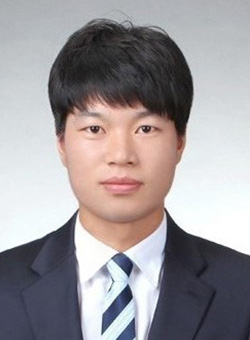
Dr. Juncong Ge, Associate Professor
Department of Mechanical Design Engineering, Jeonbuk National University, Jeonju, South Korea
Biography: Dr. Juncong Ge is currently an Associate Professor in the Department of Mechanical Design Engineering at Jeonbuk National University, Republic of Korea. He received his Ph.D. in Mechanical Engineering from Jeonbuk National University in 2019 and has since been engaged in research on sustainable energy technologies and advanced combustion systems. His research focuses on low-carbon and carbon-neutral fuels, including renewable alcohol fuels, hydrogen, ammonia, biodiesel, and green methanol, with particular emphasis on clean combustion, fuel injection optimization, plasma-assisted ignition, and emission reduction technologies for compression-ignition and marine engines. Dr. Ge has published more than 40 SCI-indexed papers in leading international journals in the fields of energy, combustion, and sustainable engineering, including Energy, Fuel, Journal of Cleaner Production. He has led and participated in more than 20 nationally funded research projects supported by the Ministry of Education, the Ministry of Science and ICT, the National Research Foundation of Korea (NRF), and local governments in the Republic of Korea. He is the inventor of four patents and serves as Associate Editor of the Journal of Advanced Marine Engineering and Technology (JAMET) and the Journal of the Korea Academia-Industrial cooperation Society (JKAIS), as well as an Editorial Board Member and Guest Editor for 11 SCI-indexed international journals. His current research interests include: (1) clean and efficient combustion of renewable alcohol fuels in common-rail direct injection diesel engines; (2) plasma-assisted ignition and ultra-lean combustion technologies for green methanol marine engines; (3) hydrogen and ammonia combustion for carbon-neutral power systems; (4) combustion diagnostics, computational fluid dynamics (CFD), and intelligent combustion optimization; and (5) sustainable transportation and next-generation low-carbon energy technologies.
Topic: Renewable Alcohol Fuels for Sustainable Diesel Power without Engine Modification
Abstract: The decarbonization of diesel-powered transportation and off-road machinery is essential for achieving global carbon neutrality while maximizing the utilization of existing diesel engine infrastructure. Although carbon-free fuels such as hydrogen and ammonia have attracted considerable attention, their widespread application is constrained by combustion controllability, dedicated fuel supply systems, and extensive engine modifications. Likewise, methanol has been extensively investigated as a renewable fuel; however, its low cetane number, low heating value, high latent heat of vaporization, and inherent toxicity remain significant barriers to its direct application in conventional compression-ignition engines. In contrast, renewable alcohol fuels, particularly ethanol and isopropanol, offer a favorable balance of fuel reactivity, oxygen content, energy density, and compatibility with existing diesel engines, making them promising candidates for practical diesel engine decarbonization. This keynote presents a practical and cost-effective strategy for the efficient utilization of ethanol–diesel and isopropanol–diesel blends in common-rail direct injection (CRDI) diesel engines without any hardware modification. A novel ultrasonic homogenization technology is employed to produce stable and homogeneous alcohol–diesel blended fuels, effectively overcoming fuel immiscibility while ensuring long-term storage stability. Combined with optimized fuel injection strategies, the proposed approach reconstructs the diesel combustion process by enhancing air–fuel mixing and oxygen utilization, thereby improving combustion efficiency and simultaneously reducing particulate matter (PM), nitrogen oxides (NOx), and carbon dioxide (CO2) emissions. Unlike conventional alternative-fuel technologies that rely on engine redesign or dual-fuel systems, this fuel-based strategy enables the direct deployment of renewable alcohol fuels in existing diesel engine fleets, providing an immediately applicable pathway toward sustainable diesel power, practical decarbonization, and cleaner transportation systems.
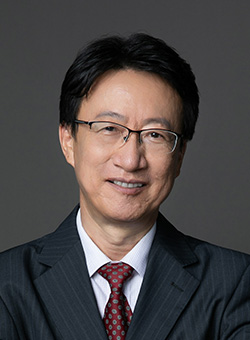
Dr. Jidong Gu, Professor
Environmental Engineering Department, Guangdong Technion – Israel Institute of Technology, Shantou, China
Biography: Dr. Jidong Gu is currently a full professor of the Guangdong Technion - Israel Institute of Technology and also Israel Institute of Technology concurrently. He obtained his M.Sc. from University of Alberta (Canada), and Ph.D. from Virginia Tech (USA). He joined Ralph Mitchell’s Laboratory at Harvard University for 6 years before taking a faculty position at The University of Hong Kong for more than 21 years. After resigning from the University in Hong Kong, he started his new full-time position with Guangdong Technion - Guangdong Israel Institute of Technology in 2020. His recent research interest includes: 1) carbon and nitrogen cycling, including anaerobic ammonium oxidation and nitrite-dependent anaerobic methane oxidation; 2) oil field microbiology for enhanced oil recovery and pollution remediation; and 3) microbiology of cultural heritage. His h-index is 97, i10-index 517, and total citations of 35,218 (GoogleScholar). He has been the world top 1% scientists by WoS since 2013. He has published in the areas of applied and environmental microbiology and toxicology with more than 500 refereed scientific journal papers, 42 book chapters. He co-edited a book with Ralph Mitchell on ‘Environmental Microbiology’ (2nd ed, John Wiley-Blackwell. 2010). In the Environmental Science and Engineering category, he is ranked the top scientists and highly cited in China. He is the editor-in-chief for International Biodeterioration & Biodegradation (2015– ) and Sustainable Biotechnology (2026– ). He also serves as International Board Member of International Society for Subsurface Microbiology (2016– ); and International Board Member, International Biodeterioration & Biodegradation Society.
Topic: The Green Anammox Technology in Wastewater Treatment: New Advances
Abstract: Microbial-driven nitrogen removal is the crucial step in full-scale wastewater treatment plants (WWTPs), a better understanding of the overall nitrogen cycling networks is therefore a prerequisite for the further enhancement and optimization of wastewater treatment processes. Anammox bacteria have a unique affiliation to the different ecological/environmental conditions, and such intrinsic property is a result of their evolution. To further advance the application of anammox in wastewater treatment, metagenomics and metatranscriptomics were used to elucidate the microbial nitrogen removal processes in an ammonium-enriched full-scale WWTPs, which were configured as an anaerobic-anoxic-anaerobic-oxic system for efficient nitrogen removal (99.63%) in a full scale WWPT. A typical simultaneous nitrification-anammox-denitrification (SNAD) process was established in each tank of this WWTP. Ammonia was oxidized by ammonia-oxidizing bacteria (AOB), archaea (AOA), and nitrite-oxidizing bacteria (NOB), and the produced nitrite and nitrate were further reduced to dinitrogen gas (N2) by anammox and denitrifying bacteria. Visible red anammox biofilms were formed successfully on the sponge carriers submerged in the anoxic tank, and the nitrogen removal rate by anammox reaction was 4.85 times higher than that by denitrification based on 15N isotope labeling and analysis. This supports the significant accumulation of anammox bacteria on the carriers responsible for efficient nitrogen removal. Two distinct anammox bacteria, named “Ca. Brocadia sp. PF01” and “Ca. Jettenia sp. PF02”, were identified from the biofilm in this investigation. By recovering their genomic features and their metabolic capabilities, our results indicate that the highly active core anammox process found in PF01, suggests extending its niche within the plant. With the possible contribution of the dissimilatory nitrate reduction to ammonium (DNRA) reaction, enrichment of PF02 within the biofilm may also be warranted. Collectively, this study highlights the effective design strategies of a full-scale WWTP with enrichment of anammox bacteria on the carrier materials for N removal and therefore the biochemical reaction mechanisms of the contributing members.
2026第十一届能源,环境与资源国际会议(ICEER2026)现诚邀广大学者、专家成为演讲嘉宾(具有博士学位且有副教授及以上职称者优先)。
会议演讲嘉宾可以享受以下权益:
1. 免费参会;
2. 免费发表一篇论文;
3. 免费茶歇、午餐和晚宴;
4. 免费青岛一日游;
5. 演讲嘉宾证书。
如您有意加入ICEER2026成为会议演讲嘉宾,请通过以下任意一种途径完成申请:
您也可以通过邮箱提交申请,请点击这里下载申请表格,填写后同您的个人简历通过邮件发送至: keynotespeaker@conference123.net
欢迎添加组委会王老师微信咨询,随时了解演讲嘉宾申请事宜。

微信:18616502321(手机同号)
添加组委会微信
(王老师)
© 2015-2026第十一届能源,环境与资源国际会议 版权所有
